

Hybrid or Fully Electric: What Changes When You Service Each in Oman
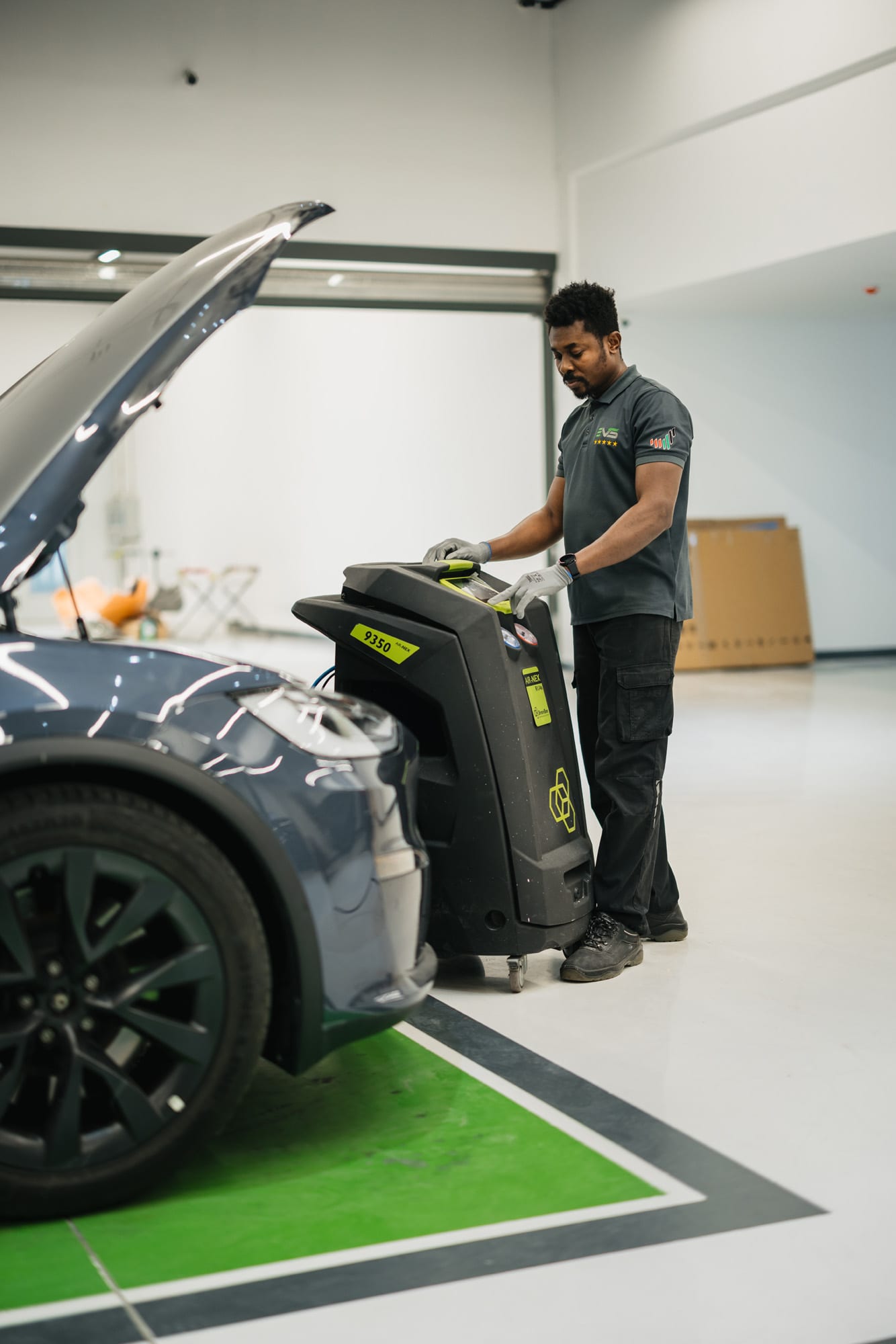
Hybrid or Fully Electric: What Changes When You Service Each in Oman
If you are comparing ownership costs or planning your next workshop visit, understanding hybrid vs electric car servicing can save you time, reduce guesswork, and help you protect your vehicle’s long-term performance. In Oman, where heat, driving conditions and long-distance use can all affect maintenance needs, the differences between a hybrid and a fully electric car matter even more.
At a glance, both vehicle types need specialist care. But the work involved is not the same. A hybrid still has a combustion engine, so it needs many of the familiar service items you would expect from a conventional car, while a fully electric vehicle replaces much of that with high-voltage battery, software and electric drivetrain care.
That means the right service provider must know both sides of the equation. EVS Oman is built around electric and hybrid vehicle expertise, with specialist technicians, advanced diagnostics and dedicated high-voltage knowledge under one roof.
Why hybrid and electric servicing are not the same
A hybrid vehicle combines two systems: an internal combustion engine and an electric propulsion system. In practical terms, that means servicing has to address both mechanical and electrical components. Oil changes, filters, spark-related components in some hybrid designs, cooling circuits and transmission-related checks may still be part of the maintenance plan.
A fully electric vehicle is different. There is no traditional engine oil service, but there is still plenty to inspect. High-voltage battery health, cooling, charging components, software updates, brake condition and suspension wear all remain important. In many cases, the service focus shifts from engine maintenance to system diagnostics and thermal management.
The biggest mistake owners make is assuming that an EV needs “less” care in the sense of being maintenance-free. It usually needs different care, not no care. The same logic applies to hybrids, which can lull owners into thinking they should be serviced exactly like a petrol car when they actually include additional EV-specific systems.
Side-by-side comparison: hybrid vs electric car servicing
The table below gives a clear, practical overview of what typically changes between the two.
| Service area | Hybrid vehicle | Fully electric vehicle |
|---|---|---|
| Engine oil | Usually required because the combustion engine still operates | Not required |
| Oil filter / air filter | Often required, depending on engine design | No engine oil filter; cabin and cooling-related filters may still apply |
| Fuel system checks | May be needed | Not applicable |
| High-voltage battery | Needs inspection, health monitoring and cooling checks | Needs inspection, health monitoring and cooling checks |
| Cooling systems | Engine cooling plus EV-related thermal systems | Battery and power electronics cooling systems |
| Brakes | Important, with possible wear despite regenerative braking | Important, though regenerative braking can reduce wear |
| Software and diagnostics | Needed for both engine and EV control systems | Essential for vehicle control, charging and battery systems |
| Drivetrain care | May include transmission-related servicing | Focus on electric drive unit, power electronics and related systems |
| Exhaust system | Usually present on many hybrids | Not applicable |
| Emissions-related servicing | Relevant on many hybrid models | Not applicable |
| Road testing and fault scanning | Important | Important, especially after warnings or updates |
The table is useful as a starting point, but the real difference lies in detail. The service schedule depends on the make, model, battery size, usage pattern, software version and local driving conditions.
What a hybrid typically needs at service time
A hybrid may feel like the easiest of the two to understand because it still behaves partly like a conventional car. That also means its service requirements can be broader. The combustion engine often needs routine attention even though electric assistance reduces how often it runs.
Typical hybrid service items may include:
- Engine oil and oil filter replacement
- Air filter checks or replacement
- Cabin filter checks or replacement
- Brake inspection and fluid checks
- Cooling system inspection for both engine and hybrid components
- Battery system diagnostics
- Software updates or module checks
- Transmission or e-CVT inspection, depending on the model
The important point is that a hybrid has more overlapping systems. A fault can be mechanical, electrical or a combination of both. For example, a warning light may relate to the engine side, the hybrid battery side or a communication issue between modules.
That is why a hybrid should not be treated as “just another petrol car with a battery.” Correct diagnosis matters, especially when warning messages are intermittent or appear after short trips, hot weather driving or extended idling.
What a fully electric car typically needs at service time
A fully electric car removes the engine oil and fuel system from the maintenance picture, but the service list is still substantial. In fact, many EV issues require more specialised diagnostics because the vehicle relies heavily on electronics, sensors and software communication.
Common EV service items include:
- High-voltage battery inspection and health checks
- Thermal management and cooling system inspection
- Brake inspection, pad wear and brake fluid checks
- Tyre wear checks and alignment assessment
- Software updates and system diagnostics
- Charging-port inspection
- Electric drive unit checks
- Low-voltage electrical diagnostics
- Sensor, module and control-unit checks where required
One of the most overlooked areas is battery thermal management. In Oman, heat can place extra stress on cooling systems and battery conditioning components. Even when the car is performing normally, a specialist inspection can help spot early signs of reduced cooling efficiency or abnormal battery behaviour.
EV owners should also remember that many problems that feel “electrical” are not necessarily high-voltage battery failures. A low-voltage issue, a software mismatch or a damaged sensor can produce symptoms that look more serious than they are. That is why advanced diagnostics are so valuable.
Service intervals: why they can feel different
There is no universal service interval that applies to every hybrid or EV, because each manufacturer sets its own schedule. Still, the pattern is easy to understand. Hybrids tend to follow a mixed schedule that combines conventional servicing with hybrid-system checks, while EVs often have longer gaps between major mechanical service items but more emphasis on periodic inspections, software and battery-related care.
For hybrids, service intervals are often influenced by:
- Engine running time
- Short-trip use
- Stop-start operation
- How often the battery assists propulsion
- The vehicle’s age and mileage
For EVs, intervals are more influenced by:
- Battery health monitoring
- Cooling performance
- Charging habits
- Brake and tyre wear
- Software status
- Suspension and steering load from vehicle weight
If you drive mainly in city traffic, your hybrid may still need regular engine-focused servicing because the combustion engine may not always reach ideal operating conditions. If you drive a fully electric car, the battery and thermal system may need more attention in hot weather or under frequent fast-charging use.
The safest approach is to follow the manufacturer’s schedule and then supplement it with specialist inspections when symptoms, warnings or changes in driving behaviour appear.
Why high-voltage training matters for both vehicle types
Many owners assume high-voltage training is only relevant for EVs. In reality, it matters for both hybrids and full electric vehicles. Hybrids also contain high-voltage components, and those systems carry the same safety concerns when handled incorrectly.
A workshop trained for high-voltage systems knows how to:
- Isolate the vehicle safely before work begins
- Use appropriate diagnostic tools and procedures
- Identify whether a fault is low-voltage, high-voltage or software-related
- Protect connected components from accidental damage
- Reassemble and calibrate systems correctly after repair
This matters because a hybrid can have both traditional mechanical faults and high-voltage faults at the same time. If a workshop only understands conventional engines, it may miss the real cause. If it only understands general electrics, it may overlook the combustion-side issues.
A specialist EV and hybrid workshop also helps reduce unnecessary parts replacement. Correct diagnosis is often the difference between a targeted repair and a costly guess.
Practical checklist for hybrid owners in Oman
If you drive a hybrid, use this checklist before and after service visits.
Before your service
- Note any warning lights, unusual noises or vibration
- Record fuel economy changes if you have noticed them
- Mention if the vehicle has been running more frequently on engine power than usual
- Share any software alerts or hybrid-system messages
- Mention hot-weather symptoms, especially if cooling seems weaker than normal
- Tell the workshop about recent battery-related warnings or charging irregularities, if applicable
At the service centre
- Ask whether both engine-side and hybrid-side diagnostics are included
- Confirm that brake wear is being checked in the context of regenerative braking
- Ask if the cooling system includes separate hybrid components
- Request a scan of stored fault codes, not just a visual inspection
- Confirm whether any software updates or calibration checks are recommended
After the service
- Keep a record of the work completed
- Monitor for repeated warnings over the next few days
- Listen for changes in engine start behaviour or unusual drivetrain feel
- Note whether brake response, fuel economy or electric-assist behaviour has changed
Practical checklist for fully electric vehicle owners in Oman
EV owners should think in terms of systems rather than engine service intervals.
Before your service
- Check for dashboard warnings, range changes or charging issues
- Note any reduced cooling performance in hot weather
- Record unusual noises from the drive unit or suspension
- Mention any recent software updates or failures during charging
- Share whether the vehicle has been fast-charged more than usual
At the service centre
- Ask for battery health and thermal system inspection
- Confirm that brake wear is assessed, even if the car uses regenerative braking
- Ask whether charging-port checks are part of the inspection
- Request software and module diagnostics where relevant
- Confirm that the workshop is trained for high-voltage procedures
After the service
- Watch for repeated charging errors or range changes
- Monitor brake feel, steering response and tyre wear
- Pay attention to cooling performance during longer drives
- Keep software and system updates documented for future reference
Common misconceptions about hybrid and EV servicing
One common misconception is that hybrids need the same service as a petrol car and nothing else. That is not true. The hybrid system adds complexity, and that complexity needs specialist understanding.
Another misconception is that EVs are basically “service-free” because they have no engine oil. In reality, EVs still need careful inspection of their batteries, cooling systems, brakes, electronics and software. Skipping those checks can create expensive problems later.
A third misconception is that any garage can service both types equally well. Some general workshops may be able to handle basic work, but high-voltage systems, EV diagnostics and advanced software issues require dedicated expertise. For both hybrids and EVs, correct handling is a safety issue, not just a quality issue.
How EVS Oman approaches hybrid and electric servicing
EVS Oman is part of a specialist regional EV service brand with experience across diagnostics, batteries, software, repairs and comprehensive electric vehicle care. The key difference in its approach is that it does not treat EV servicing as an afterthought. It is the core focus.
That matters for owners because the workshop must understand both the similarities and the differences between hybrids and fully electric cars. Whether the job involves battery-health checks, software-related faults, drive-unit concerns, brake work or broader diagnostic support, the right process starts with accurate inspection and specialist knowledge.
EVS also brings a regional perspective that is important for Oman. Heat, usage patterns and the growing mix of imported EV and hybrid models all shape what the service plan should look like. A specialist workshop is better placed to understand that reality than a general repair shop that only sees these vehicles occasionally.
FAQ
Do hybrids need engine oil changes?
Yes. Most hybrids still have an internal combustion engine, so they usually require engine oil changes and other engine-related maintenance. The exact interval depends on the model, the manufacturer’s service schedule and how the vehicle is driven.
Do electric cars need less servicing than hybrids?
Generally, electric cars have fewer engine-related service items because there is no combustion engine oil service or fuel system maintenance. However, they still need important work such as battery inspection, thermal management checks, brake service, suspension checks and software diagnostics.
Why is battery cooling so important in Oman?
High temperatures can place extra stress on battery systems and thermal components. Good cooling helps protect performance and supports consistent operation in hot weather. For both hybrids and EVs, battery thermal management is one of the most important areas to inspect.
Can the same workshop service both hybrids and EVs safely?
Only if it has the right training, tools and procedures. Both vehicle types include high-voltage systems, and hybrids still combine that with conventional mechanical systems. A workshop should understand safe isolation, diagnostics and the specific service needs of each vehicle type.
What should I tell the workshop before booking a service?
Share any warning lights, charging problems, range changes, unusual noises, cooling issues or changes in driving feel. The more detail you provide, the easier it is for a specialist workshop to diagnose the issue accurately and avoid unnecessary work.
What is the biggest difference between hybrid and electric servicing?
The biggest difference is that hybrids still require engine-related servicing, while EVs shift the focus toward battery health, cooling, software and electric drivetrain care. Both need brakes, tyres, diagnostics and specialist attention, but the service priorities are different.
Final thoughts: the right service depends on the technology
When it comes to hybrid vs electric car servicing, the key lesson is simple: both vehicle types need specialist care, but they do not need the same care. Hybrids still require engine-side maintenance alongside hybrid diagnostics, while fully electric vehicles depend more heavily on battery health, cooling, software and electrical systems.
If you are in Oman and want a workshop that understands both technologies, specialist high-voltage knowledge makes all the difference. It helps protect your vehicle, improves diagnostic accuracy and gives you confidence that the work is being handled properly.
Ready to learn more about EV and hybrid servicing in Oman? Visit EVS Oman or contact the team through the EVS Oman contact page to explore specialist electric and hybrid vehicle support.