

EV Brakes and Suspension: Why Parts Wear Differently
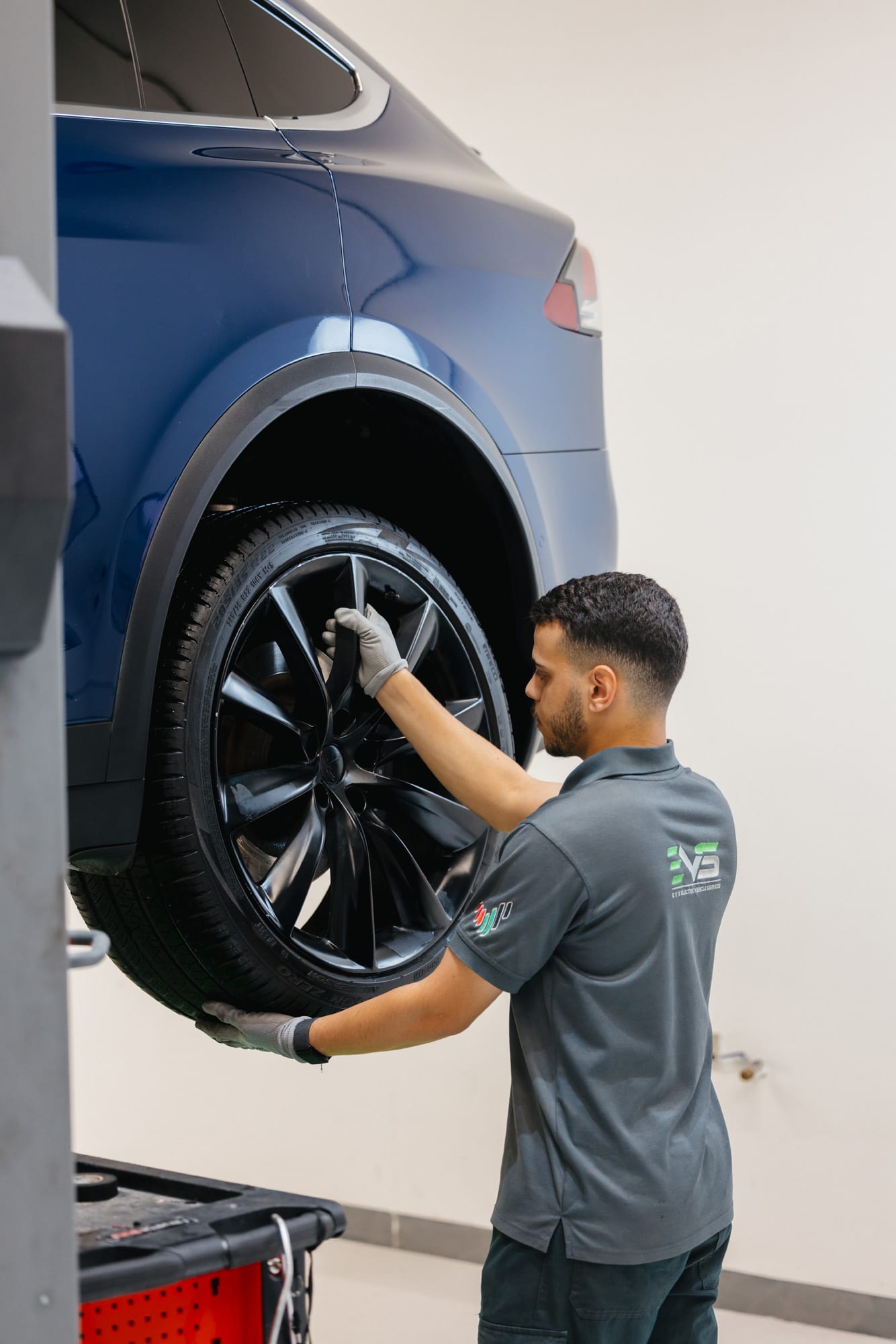
If you are searching for EV brake and suspension service Oman, the key thing to understand is that electric cars do not wear like conventional vehicles. Their brake systems, tyres and suspension are affected by regenerative braking, heavier battery packs and the instant torque that makes EVs feel so responsive on the road.
That difference matters even more in Oman, where heat, road surfaces, speed variation and daily driving conditions can all influence how quickly components age. A sound inspection approach is not just about replacing worn parts; it is about understanding how an EV uses them differently from a petrol or diesel car.
Why electric cars stress brakes differently
One of the biggest changes in an EV is regenerative braking. Instead of relying only on friction brakes to slow the car, the motor helps recover energy and feed it back into the battery. That means the brake pads and discs may not be used in the same way as on a traditional vehicle, but that does not mean they are under less overall attention.
In fact, lower day-to-day friction-brake use can create a different kind of wear pattern. Components may sit unused for longer periods, which can allow surface corrosion, sticking calipers or uneven contact to develop, especially if the car is driven in a stop-start pattern or left unused for stretches.
EV drivers often assume reduced brake use automatically means lower maintenance needs. In practice, the opposite can be true: because braking is split between the regeneration system and the mechanical brakes, the inspection has to confirm both are operating correctly and that the transition between them feels smooth and predictable.
How battery weight changes suspension and tyre load
Electric vehicles usually carry a heavy battery pack mounted low in the chassis. That layout helps with stability and handling, but it also means the suspension is supporting a different weight profile from a comparable combustion car.
Extra mass affects springs, dampers, bushes and alignment angles over time. On rougher roads or over speed bumps, the suspension may absorb more repeated impact, and on hot days the materials can be pushed harder if the vehicle is driven fully loaded or on longer journeys.
Tyres also feel this effect. EVs often deliver torque instantly, and that can increase tyre scrubbing during acceleration if the tyres are not in good condition or if alignment is already slightly out. The result is often uneven wear patterns that may show up long before a driver notices a major handling issue.
Why instant torque can accelerate wear
Instant torque is part of what makes EVs feel refined and quick. However, that immediate power delivery can place extra stress on traction, tyre grip and suspension geometry, especially when driving over worn surfaces or when the vehicle is frequently accelerating hard from a standing start.
This does not mean EVs are fragile. It means the wear pattern is different. A driver may notice tyre shoulders wearing faster, steering feeling less precise, or the vehicle becoming less settled over bumps even when the car still feels strong in a straight line.
In Oman, where roads can vary from smooth highways to more uneven local routes, that difference becomes important. An EV-specific inspection should look beyond general wear and ask whether the vehicle’s weight, torque delivery and braking behaviour are creating a pattern that needs correction.
Warning signs EV drivers in Oman should not ignore
Some symptoms are easy to dismiss at first, but they often tell you the brakes or suspension need specialist attention. If your EV is making more noise than usual, pulling to one side, or no longer riding as smoothly, it is worth having it checked sooner rather than later.
Here are the signs that should not be ignored:
- Noise when braking: squeaking, grinding, scraping or a clicking sound can point to pad wear, corrosion, a sticking component or another brake issue.
- Pulling to one side: if the car drifts left or right under braking or while cruising, alignment, tyre pressure, brake balance or suspension parts may need attention.
- Uneven tyre wear: worn inner edges, outer shoulders or patchy wear can indicate alignment problems, worn suspension parts or incorrect tyre rotation patterns.
- Soft, bouncy or unsettled ride: if the car feels floaty, knocks over bumps or takes too long to settle after a dip, dampers or bushes may be weakening.
- Steering wheel vibration: this may point to tyre imbalance, braking issues or suspension geometry concerns.
- Longer stopping feel: even if regenerative braking is active, the mechanical braking system still needs to respond consistently.
None of these symptoms automatically means a major repair. But they do mean the vehicle needs a proper inspection rather than a guess.
What makes EV suspension wear different from ICE vehicles
The suspension in an EV has to do more than carry weight. It must control body movement, maintain tyre contact and remain stable under the changing loads created by the battery pack, the motor and the vehicle’s acceleration profile.
Because of that, familiar parts such as bushes, joints, control arms and dampers may show wear in slightly different ways. A vehicle might not feel “broken,” but it can start to feel less precise, especially on rougher roads or during quick lane changes.
Another factor is tyre and wheel geometry. Even a small alignment issue can become more noticeable on an EV because of the combination of weight and torque. Over time, that can affect handling feel, tyre life and ride comfort at the same time.
For that reason, EV brake and suspension service Oman should always be approached as a system check, not a single-component fix. The goal is to restore balance across the car, not just to silence one symptom.
What an EV-specific brake and suspension inspection checks
A proper EV-focused inspection should be more detailed than a quick visual check. The technician needs to understand the relationship between regenerative braking, conventional braking and chassis load.
A thorough brake and suspension inspection may include:
- brake pad thickness and wear pattern
- disc condition, surface condition and corrosion
- caliper operation and signs of sticking
- brake hoses, lines and fluid condition where applicable
- brake balance and braking response
- suspension bushes, joints and linkages
- shock absorber or damper condition
- spring condition and ride height consistency
- wheel alignment and toe/camber signs
- tyre wear patterns, pressure condition and rotation history
- steering feel, vibration and road-test behaviour
In an EV, the inspection also needs to consider whether the braking system is blending properly with regenerative braking. If the driver feels a sudden transition, uneven deceleration or inconsistent pedal response, the issue may be more than simple pad wear.
Why Oman driving conditions make inspections especially important
Oman’s driving environment can be demanding in its own way. Heat increases the stress on rubber, fluid, seals and electronic systems. Road surfaces can vary, and the combination of city driving, highway use and occasional rougher sections can create uneven wear across tyres and suspension.
That is why preventative inspection matters. It helps identify wear before it becomes a noise, a vibration or a handling complaint. It also helps prevent secondary damage, such as tyres wearing out faster because alignment was slightly off, or brake components suffering because a caliper was sticking quietly in the background.
For EV owners, the best approach is to treat brake and suspension checks as part of normal ownership rather than as a response to a serious fault. If the vehicle is carrying more weight, using regenerative braking and delivering instant torque, it deserves a specialist inspection plan.
How to tell when it is time for a specialist check
You do not need to wait for a warning light to appear before booking an inspection. Many brake and suspension issues show up first as changes in feel, sound or tyre condition.
A specialist check is sensible if you notice any of the following:
- your EV feels less stable over uneven roads
- the steering no longer feels as sharp as it used to
- one tyre wears faster than the others
- braking feels noisy or inconsistent
- the car dips, bounces or knocks more than expected
- you have recently hit a pothole, kerb or road hazard
- the car has undergone previous repairs and now feels different
Even if the issue turns out to be minor, confirming that early can save time and reduce the chance of further wear. That is especially important with EVs, because one overlooked alignment issue can affect both tyre life and handling feel.
Why specialist EV diagnosis matters more than general guesswork
A general garage may be able to spot obvious brake wear, but EVs often require more context. The technician needs to think about how the battery weight, motor torque and regenerative systems are influencing the wear pattern.
That is one of the reasons specialist EV servicing is valuable. It is not just about the tools, although the right diagnostic equipment helps. It is also about the experience to interpret the symptoms correctly and link them to the vehicle’s electric architecture.
EVS brings specialist technicians, advanced diagnostics and dedicated electric-vehicle expertise together under one roof. That approach matters when the problem is not simply “a worn part,” but a wear pattern created by the way the entire vehicle behaves on the road.
What the right repair approach should aim to achieve
The goal of an EV brake and suspension repair is not only to replace parts. It is to restore confidence in the vehicle’s braking, steering and ride quality.
A good repair approach should aim for:
- smooth braking performance
- even tyre wear going forward
- improved steering accuracy
- stable ride comfort
- reduced noise and vibration
- safe operation under everyday driving conditions
Sometimes a repair will be simple, such as correcting alignment or replacing a worn bush. In other cases, the cause may be a combination of issues, such as tyre wear plus brake corrosion plus a weakened suspension component. That is why the inspection stage is so important.
How EVS Oman approaches brake and suspension care
EVS Oman is focused on specialist electric and hybrid vehicle servicing, backed by EVS regional expertise. For drivers in Oman, that means the brand is positioned around correct diagnosis, reliable workmanship and total vehicle care rather than a low-cost, one-size-fits-all fix.
When it comes to brake and suspension issues, that matters because the symptoms can overlap. A noise may sound like a brake issue, but the true cause could involve alignment or suspension movement. Likewise, tyre wear might look like a tyre problem when it is actually the result of a braking imbalance or worn chassis component.
If you are comparing providers, it helps to choose a team that understands the full EV system and not just the visible wear. That is the difference between replacing parts and restoring the vehicle properly.
FAQ: EV brake and suspension care in Oman
Do electric cars wear brakes more slowly than petrol cars?
Often, the friction brakes may be used less frequently because regenerative braking does some of the work. But that does not mean they need less attention overall. In many cases, reduced use can create its own issues, such as corrosion, uneven wear or sticking components if the brakes are not inspected and maintained properly.
Why do EV tyres wear faster?
EVs are typically heavier because of the battery pack, and they deliver instant torque. That combination can increase tyre stress, especially if the alignment is slightly off or the driver frequently accelerates hard. Tyre condition, pressure and rotation history all play a role in how evenly the tyres wear.
What causes an EV to pull to one side?
Pulling can come from a few different sources, including wheel alignment, uneven tyre pressure, brake imbalance or worn suspension components. Because several systems can create the same symptom, an EV-specific inspection is the best way to identify the real cause.
Is brake noise normal in an EV?
Some light noise can happen occasionally, especially after the car has been parked or driven in wet conditions. But repeated squeaking, grinding or scraping should not be ignored. EV brakes can still corrode or wear unevenly, so any persistent noise deserves an inspection.
What does a brake and suspension inspection usually include?
A proper inspection should look at pads, discs, calipers, tyres, alignment, dampers, bushes, joints and steering feel, along with the interaction between regenerative and mechanical braking. It should not stop at a surface-level look at one component. The aim is to understand how the whole system is performing together.
Final thoughts: small symptoms can point to bigger wear patterns
Electric cars are efficient, quiet and responsive, but their component wear is not the same as a conventional vehicle’s. Regenerative braking, extra battery weight and instant torque all shape how brakes, tyres and suspension age over time.
If you notice noise, pulling, uneven tyre wear or a ride that feels less settled, do not wait for the issue to grow. A specialist inspection can help you understand whether the problem is minor, developing or already affecting the vehicle’s safety and performance.
For expert EV brake and suspension service Oman, EVS Oman is ready to help you understand your vehicle and care for it the right way. Visit https://evsoman.com/ or get in touch through the contact page at https://evsoman.com/contact to learn more about EVS Oman and the specialist support available for electric and hybrid vehicles.